
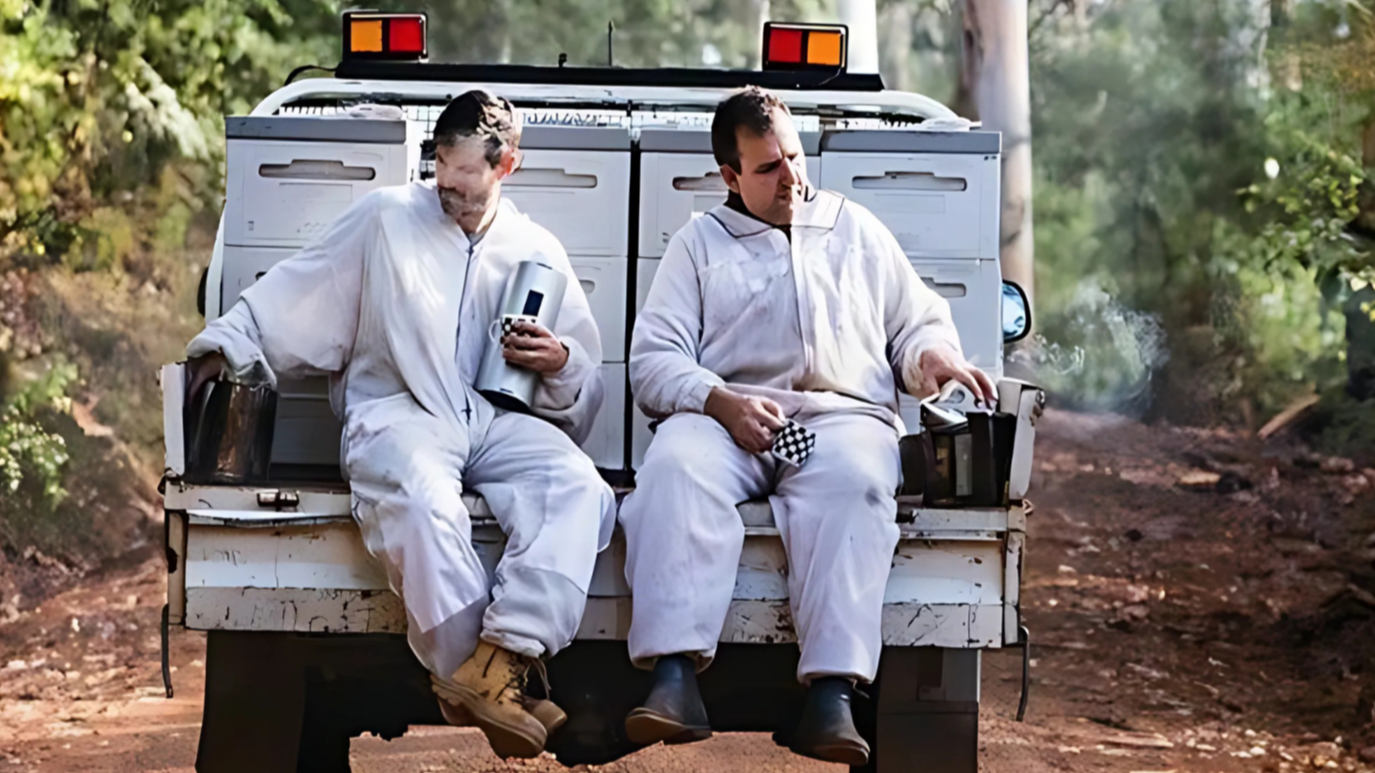
Two brothers. One forest. A promise they've never broken.
It started as a hobby. The bees had other ideas.
Ryan and Steve didn't set out to build a honey business. They set out to keep bees — because bees are worth keeping, and the forests around Pemberton are worth paying attention to.
What started on weekends, in gear that didn't quite fit, with hives that multiplied faster than they'd planned, became something neither of them could walk away from. Not because the economics made sense yet. Because the honey did.
When you pull a frame from a Jarrah hive in the middle of a WA summer and hold it up to the light, you understand something about what food is supposed to be. Raw. Uncompromised. Exactly what the tree and the bee made it, and nothing else.
By 2017, the hobby had outgrown the shed. South West Honey was the only honest next step.
Pemberton. Not chosen for convenience.
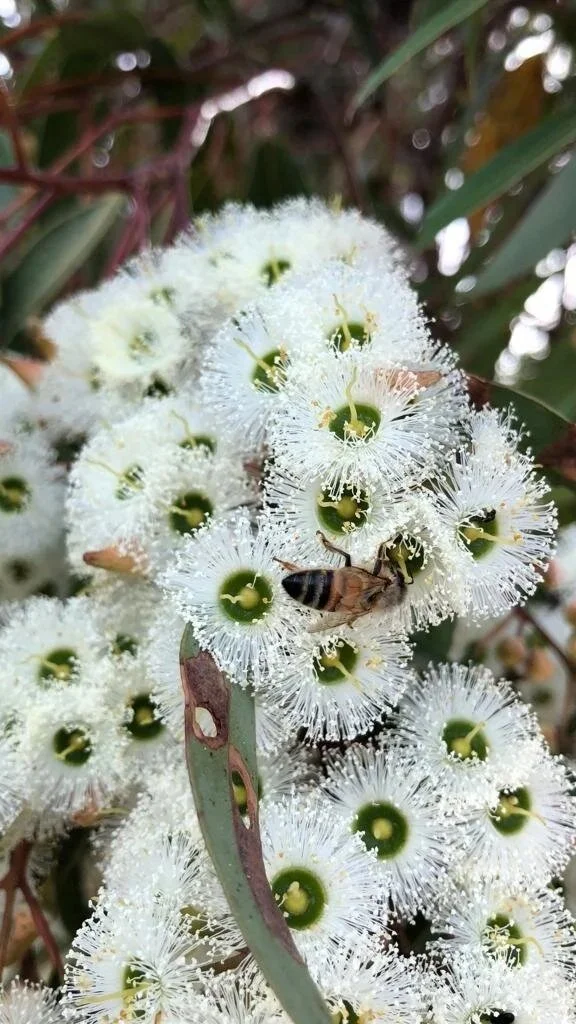
The forests surrounding Pemberton in Western Australia's South West are not easy to work in. The Jarrah trees flower every two years at best — and some years, barely at all. The Blackbutt and Marri add their own rhythms, their own unpredictability. You don't manage these trees. You wait for them.
Ryan and Steve run between 300 and 500 hives across sites in the Pemberton region and across the south west — placed in native forest that hasn't been sprayed, cleared, or compromised. Their bees forage among trees that have stood for centuries. The honey they produce is a direct expression of that landscape: the soil, the rainfall, the season, the flower.
Western Australia is also, as of today, free of the varroa mite — the parasitic mite that has devastated bee populations across the rest of Australia and New Zealand. That's not luck. It's geography, biosecurity, and the kind of environment that only exists in a handful of places on earth. It matters for colony health. It matters for honey quality. And it's one of the reasons WA honey is attracting serious attention from buyers and distributors around the world.

Not cutting corners when no one's watching.
There's a version of the honey business that involves buying in bulk, blending batches, heating for shelf life, and marketing the result as pure. A lot of Australian honey is made that way. A 2024 national study found nearly one in five Australian-branded honey samples were adulterated. Heated. Blended. Diluted. Still sold as pure.
Ryan and Steve have never operated that way. Not because they thought anyone was checking — but because they'd know.
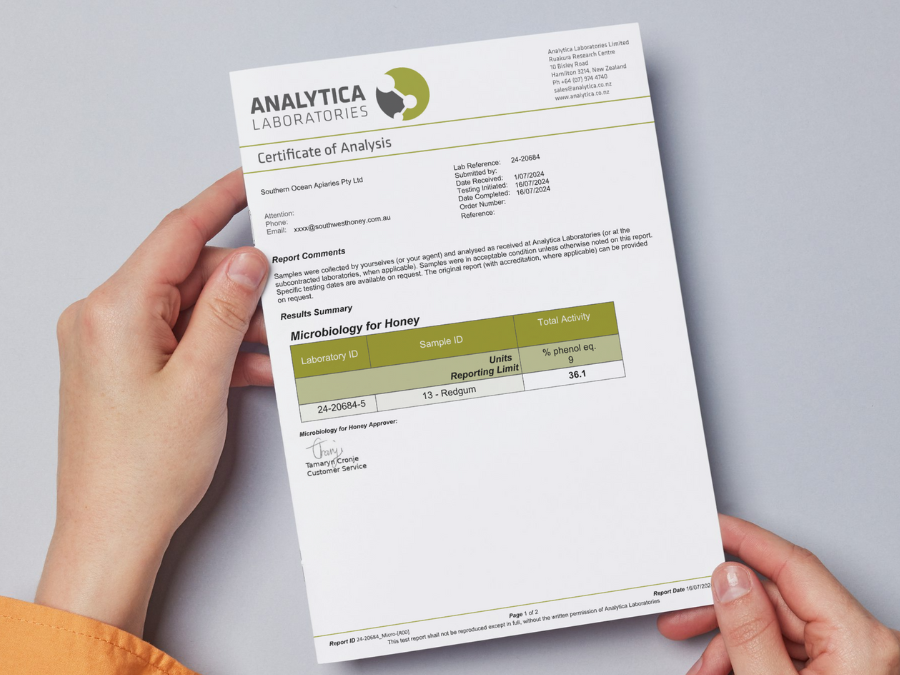
Every batch of South West Honey is cold-extracted below 40°C to preserve the enzymes, the activity, and the flavour that heat processing destroys. Every harvest batch is sent to an accredited New Zealand laboratory and tested individually using the University of Waikato agar well diffusion method — the same methodology that underpins Manuka honey research globally. The TA rating on each jar reflects a real, measured result. We disclose the actual figure on request. The label rating is always reported conservatively below what the laboratory found.
This is what it costs to do it properly. They've never considered doing it any other way.
Certified. Not because it's required. Because it's right.
South West Honey holds B-QUAL certification — Australia's national honey quality assurance program, covering hive management, hygiene standards, chemical residue testing, and traceability from hive to jar.
B-QUAL isn't a marketing badge. It's an audit. It requires documentation, inspection, and accountability across every stage of production. Ryan and Steve chose to pursue it not because their retail partners demanded it, but because it reflects exactly how they already operate.
Their honey is also independently tested for C4 sugar adulteration — the most common form of honey fraud — and for pesticide residues. Every test comes back clean. Not because they expected otherwise. Because they wanted the evidence.
The honey is ready when the forest says so.
Jarrah flowers on its own schedule. Blackbutt and Marri do the same. We harvest when the trees are ready, test every batch before a single jar is filled, and ship direct to your door.
That's the whole operation. Nothing hidden. Nothing added.