Image 1 of 5
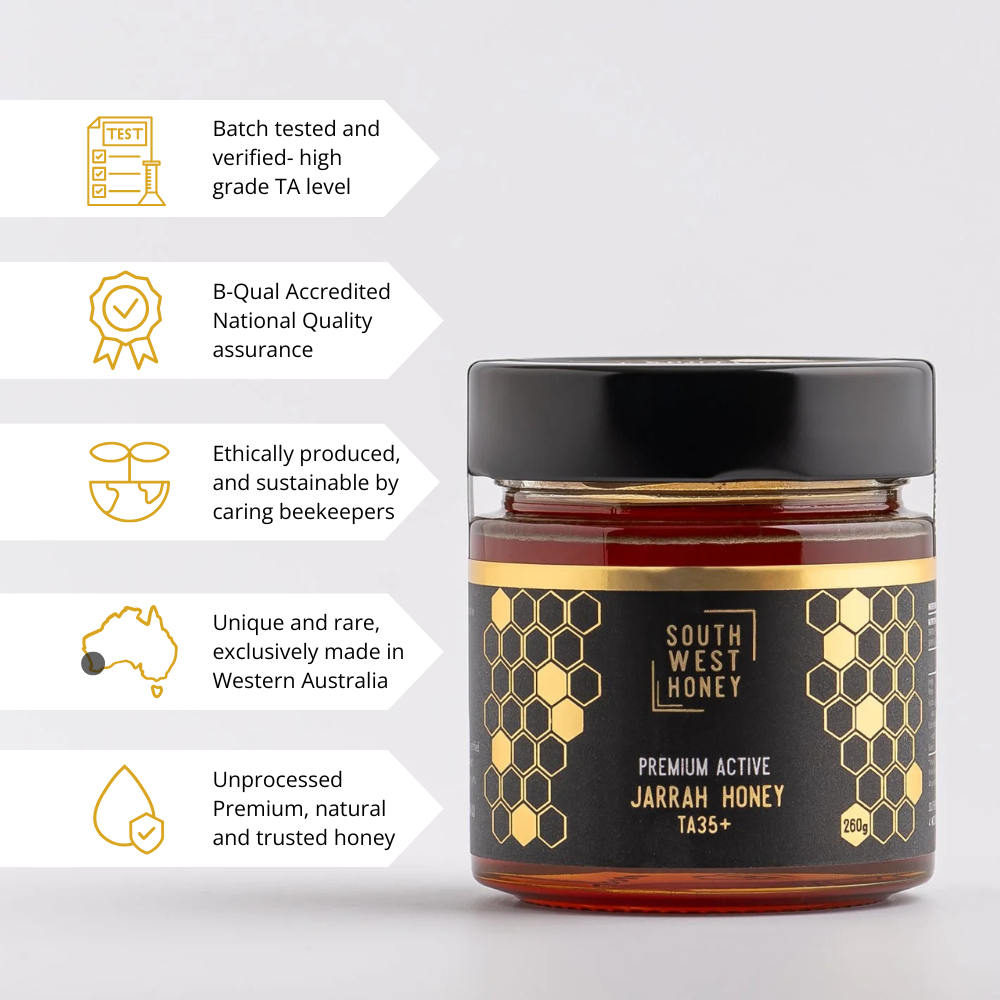 Image 2 of 5
 Image 3 of 5
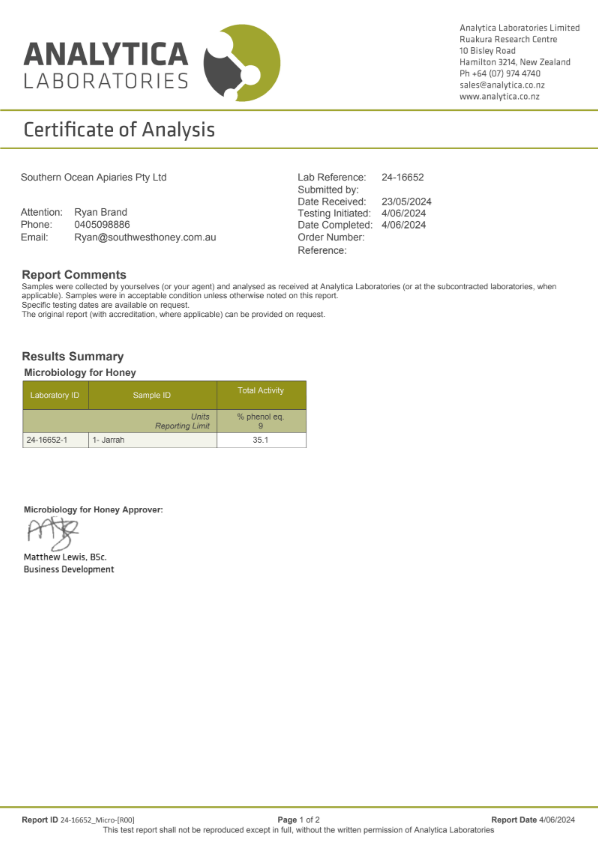 Image 4 of 5
 Image 5 of 5
Premium Jarrah Honey TA35+
Deep in the Jarrah forests surrounding Pemberton, Western Australia, our hives sit undisturbed among trees that have grown here for hundreds of years. The Jarrah (Eucalyptus marginata) flowers irregularly — some years not at all — which makes its honey exceptionally rare, and our beekeeping calendar unpredictable. We wouldn't have it any other way.
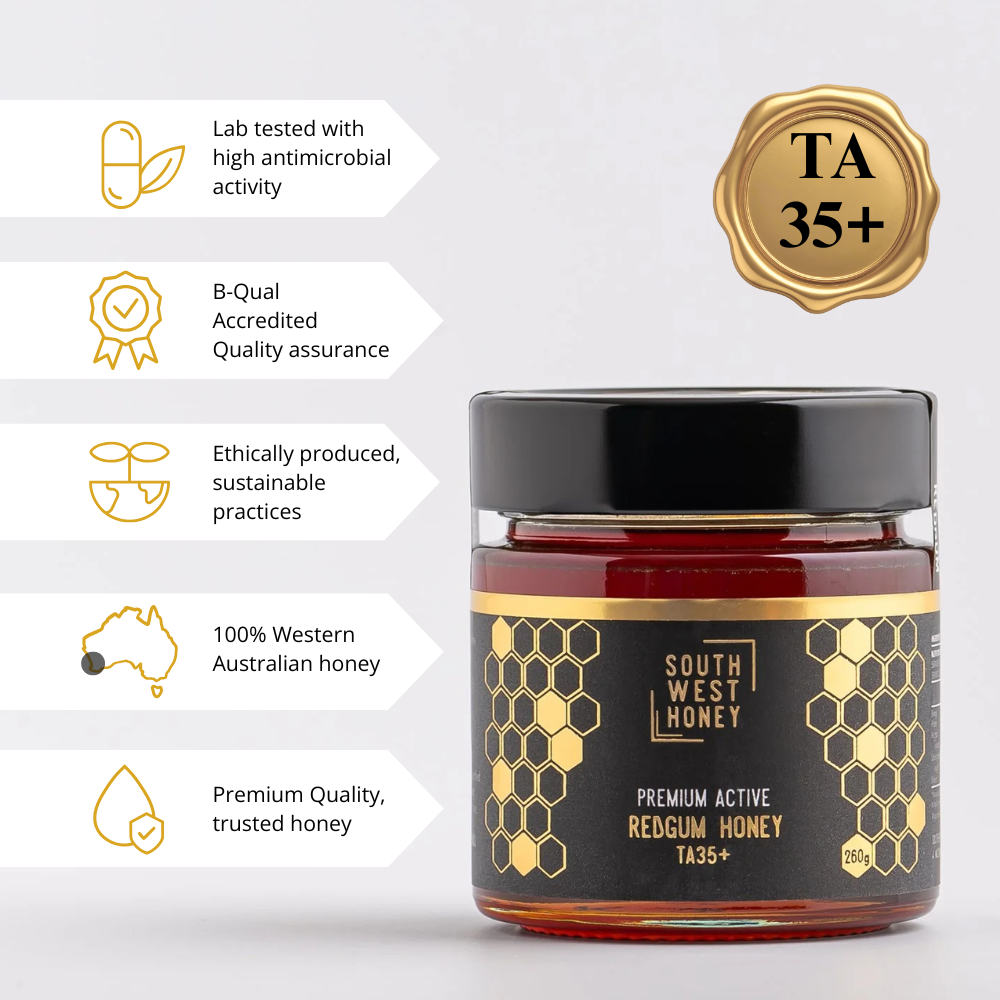
When the Jarrah flowers, our bees forage in forests free of agriculture, chemical spray, and industrial interference. The resulting honey is dense, dark amber — rich in naturally occurring antibacterial compounds that are independently measured and certified against the Total Activity (TA) rating system. Our TA35+ certification means every batch is verified by an accredited Australian laboratory before a single jar is filled.
Cold extraction preserves the bioactive properties that heat processing destroys. We extract below 40°C — the temperature threshold above which live enzymes begin to denature — so what reaches your table is as close to the hive as it is possible to be.
-
Total Activity 35+ (TA35+)
-
Independently verified by accredited Australian laboratory
-
Antimicrobial activity assay against standard control
-
Every harvest batch is tested individually
-
TA35+ = approximately UMF 10–15+ Manuka (NZ benchmark)
-
TA rating is reported below actual measured result to prevent misrepresentation
Tasting notes & food pairings
-
Deep, dark amber with a slow, viscous pour. Rich malt and caramel on the nose with a complex, slightly medicinal finish — not sweet in the conventional sense. Bold, distinctive, lingering.
-
Strong blue cheese, sourdough with cultured butter, dark chocolate, oat-based porridge, aged cheddar. Exceptional stirred into a whisky cocktail or used as a glaze for roasted duck or pork belly.
-
Take 1–2 teaspoons daily, straight or stirred into warm (not boiling) water. Many customers use it for wound care, gut health support, and immune maintenance — drawing on the honey's naturally occurring antibacterial compounds.