
 Image 1 of 9
 Image 2 of 9
 Image 3 of 9
 Image 4 of 9
 Image 5 of 9
 Image 6 of 9
 Image 7 of 9
 Image 8 of 9
 Image 9 of 9
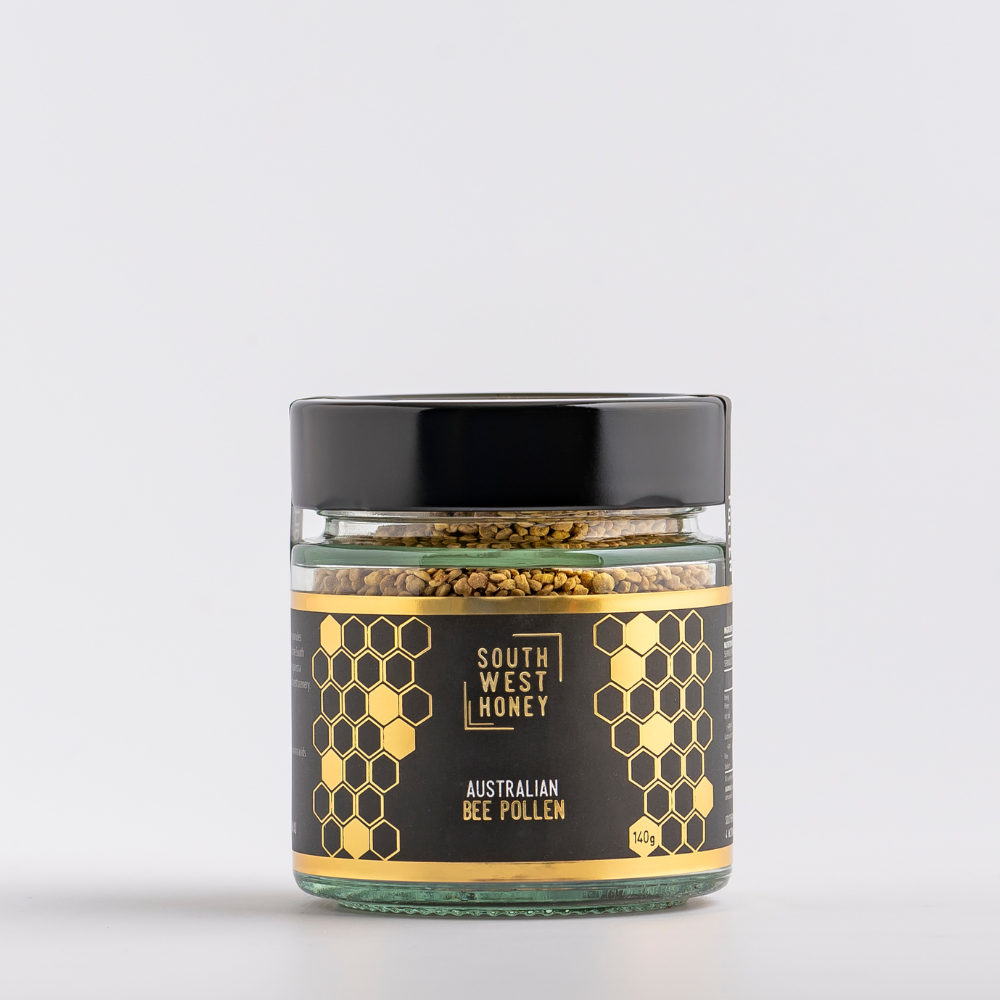
Premium Western Australian Bee Pollen | 140g
-
Bee pollen is collected by forager bees as they move between flowers and packed into granules — each one a compressed mixture of pollen, nectar, and bee secretions from whatever native flora the bees were working at the time of harvest. Our pollen is collected from hives placed in the native forest and heath of south-west Western Australia, the same environment that produces our active honey range.
It is raw and unheated. No drying at high temperature, no additives. The granule colours vary from batch to batch depending on which flowers were dominant during the harvest — this is normal, and a sign of genuine single-origin collection rather than blended commercial pollen.
-
Start with half a teaspoon daily and increase to 1-2 teaspoons over the first week if no sensitivity is observed. Bee pollen can cause reactions in people with pollen allergies — approach with caution if you have known sensitivities.
Add to smoothies, sprinkle over yoghurt or porridge, or take directly from the spoon. Store in a sealed container in the refrigerator to preserve freshness.
-
Collected in the Pemberton region, south-west Western Australia. Varroa-free beekeeping environment. Produced by Southern Ocean Apiaries Pty Ltd trading as South West Honey.
Biosecurity Notice:
Due to Tasmanian biosecurity regulations, we are unable to ship honeycomb, bee pollen, or beeswax products to Tasmania.
All liquid and creamed honey products can still be shipped Australia-wide, including Tasmania.
Click here for more information: Pollen from Western Australia at a Glance Source: Rob Manning, Dept. of Agriculture and Food WA, 2008.