
How to choose honey in Australia: a beekeeper's guide
To choose a good honey, check five things on the jar: where it comes from, which flowers it was made from, whether it is raw, whether any rating is backed by a lab test, and the price per 100 g. Then pick the honey that suits how you plan to use it.
That is the short answer. The longer one is below, because the honey shelf can be confusing. Two jars that look much the same can sit at $9 and $30, and the label does not always explain why.
We keep bees in the South West of Western Australia, so we have a favourite. This guide is written to work for any honey, though, whether you buy it from us, a market stall or the supermarket.
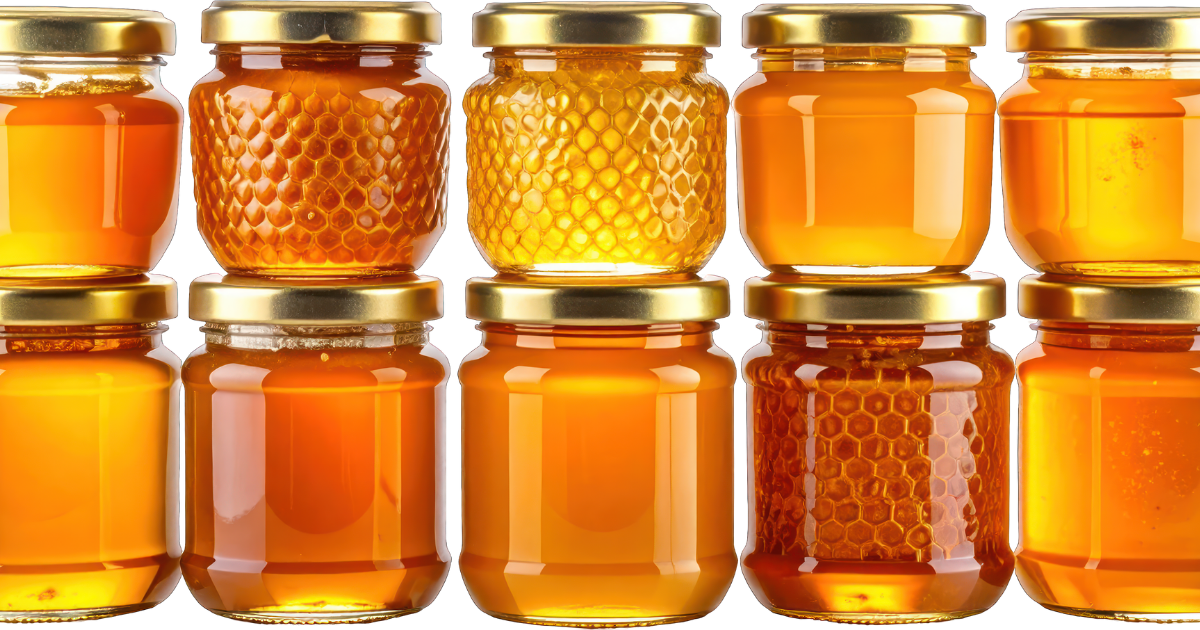
The five things to check on any jar
1. Where the honey comes from
Every food sold in Australia has to carry a country of origin label, and the wording matters.
“Product of Australia” means the honey came from Australia and was processed here.
“Packed in Australia” only tells you where the jar was filled. The honey inside may come from anywhere.
A bar chart on the label shows how much of the contents is Australian.
Australia imports honey as well as producing it, about 9 million kg in 2024 according to ABC News. Imported honey is usually cheaper. Neither choice is wrong. The label simply tells you which one you are buying.
It also helps to know that “honey” is a protected name. A product can only be sold as honey in Australia if it meets the definition in the Food Standards Code: the natural sweet substance produced by honey bees from the nectar of blossoms.
2. Which flowers it was made from
Bees make honey from nectar, and the flowers they visit decide the colour and the taste.
A single-flower honey, also called monofloral, comes mostly from one type of tree or plant. Jarrah, Redgum (Marri) and Blackbutt are Western Australian examples. They tend to be darker and richer. A blended or wildflower honey comes from many plants and is usually lighter and milder.
Both have their place. A named floral source just tells you more about what is in the jar. If you would like to know more about one of them, we have written a guide to what Jarrah honey is.
3. Whether it is raw
Raw has no legal definition in Australian food law. Most producers use it to mean the honey has not been heated above hive temperature and has not been finely filtered, so it keeps the character of the flowers it came from.
Because the word is not regulated, it is fair to ask a producer what they mean by it. Ours is raw and unheated.
One thing raw honey will do is crystallise. It goes cloudy and firm over time. That is natural and it is not a fault. We explain why in does honey expire?
4. Whether the rating is backed by a test
Some honeys carry a number on the label, such as TA 10+, TA 35+ or MGO 100+. These are activity ratings. Each one is a laboratory measurement of the honey, graded against a standard.
A rating is only as good as the test behind it. Look for a producer who can show the result for the batch you are buying, from an independent laboratory. Our guide to TA, UMF and MGO ratings explains how the systems differ.
5. The price per 100 g
Honey jars come in many sizes: 250 g, 260 g, 400 g, 500 g and more. The only fair way to compare them is the price per 100 g. Supermarkets show this on the shelf ticket. For anything else, divide the price by the weight in grams and multiply by 100.
As a rough guide, everyday supermarket honey usually costs under $2 per 100 g. Small-batch and single-flower honeys commonly run from about $3 to $12 per 100 g.
Why some honey costs more
Price differences in honey usually come down to four things.
How rare the flowers are. Jarrah grows only in the South West of Western Australia and does not flower every year, so there is less of it to go around. We cover this in more detail in why Jarrah honey is more expensive.
How big the operation is. Honey from one producer's own hives, extracted and jarred in small batches, costs more to make than honey blended at scale.
How it is handled. Raw honey is slower to extract and jar because it is not heated to make it flow.
What testing sits behind it. Sending every batch to an independent laboratory adds cost, and it is what makes a rating worth trusting.
A higher price does not make a honey better for every purpose. It should come with a reason you can see.
What a jar costs per serve
A jar price can look steep until you work out what a serve costs.
A serve of honey is about 15 g, which is roughly two teaspoons. A 260 g jar holds about 17 serves and a 400 g jar holds about 26.
| Honey | Jar price | Cost per serve |
|---|---|---|
| Western Australian Coastal Honey, 400 g | $12.75 | About 48 cents |
| Premium Jarrah Honey TA35+, 260 g | $27.45 | About $1.58 |
| What it is for | What to look for | A good place to start |
|---|---|---|
| Toast, tea and porridge | A mild honey in a larger jar at a fair price per 100 g | Coastal Honey 400 g |
| Baking and cooking | An everyday honey. Heat reduces a honey's activity, so a rated honey is wasted in the oven | Coastal Honey 400 g |
| A cheese board or dessert | Honeycomb, or a dark single-flower honey with plenty of flavour | Raw honeycomb |
| A rated honey | A stated rating and a test result for the batch | Jarrah TA35+ |
| A gift | Something that looks generous and lets them taste a few varieties | Honey Flight Tasting Pack |
| Not sure what you like yet | A tasting pack, so you can try before buying a full jar | Honey Flight Tasting Pack |
Five questions worth asking a producer
If you are buying direct, at a market or online, these are fair questions.
Is the honey from your own hives?
Where were the hives when this honey was made?
Has it been heated or filtered?
Is the rating on the label the result for this batch?
Can I see the test certificate?
A producer who knows their honey will answer all five without fuss. We are happy to answer them for any jar we sell.
Common questions about buying honey
What is the best honey to buy in Australia?
There is no single best honey. The best one for you depends on how you will use it. For a reliable choice, look for “Product of Australia” on the label, a named floral source, and a producer who can tell you where the hives were.
Is raw honey better than supermarket honey?
They are different products. Raw honey has not been heated or finely filtered, so it keeps more of the flavour of the flowers it came from. Supermarket honey is usually blended for a consistent taste and a lower price. For cooking, either will do the job. For eating on its own, you may well taste the difference.
Is expensive honey worth it?
It depends on the job. For baking, an everyday honey is all you need. For a cheese board, a gift or a rated honey, work out the cost per serve and decide whether the taste and the proof are worth that to you.
Why has my honey gone solid?
It has crystallised, which is natural and happens to most raw honey. Stand the jar in warm water and it will soften again. Avoid the microwave, which can overheat it.
How should I store honey?
Keep it sealed, in a cool, dark cupboard. Honey does not need to go in the fridge. There is more on storage in does honey expire?
Can babies have honey?
No. Honey should not be given to children under 12 months old.
Where to start
If you are new to single-flower honey, start with a taste. Our Honey Flight Tasting Pack lets you try several of our Western Australian honeys side by side before you choose a full jar.
We are beekeepers with our own hives in the South West of Western Australia. All of our honey is raw and Western Australian, and every batch of our active honey is independently laboratory tested. Delivery is a flat $9.95 anywhere in Australia, and free on orders over $125.